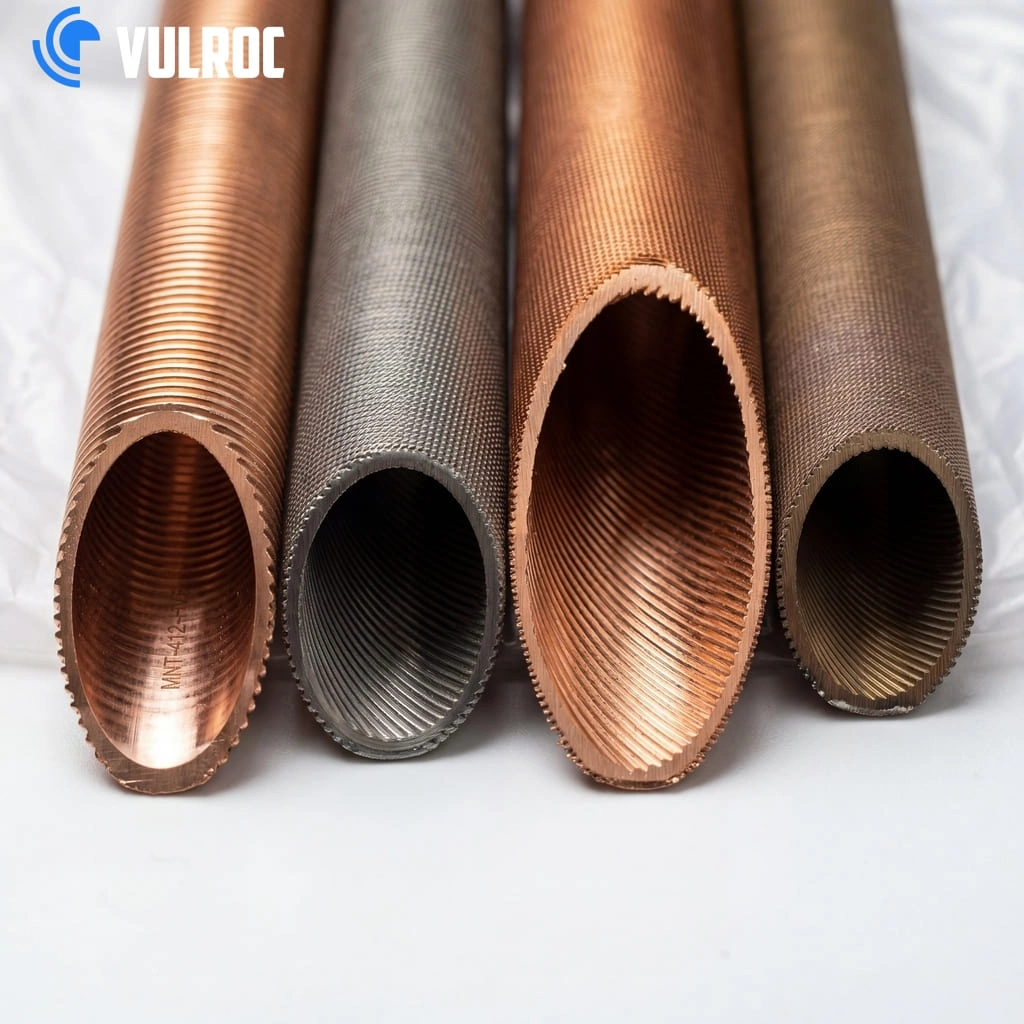
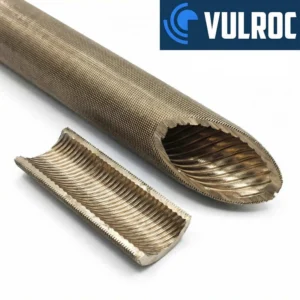
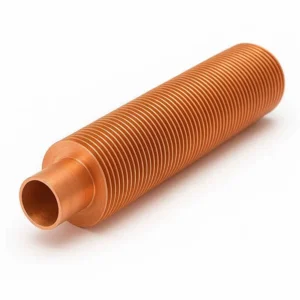
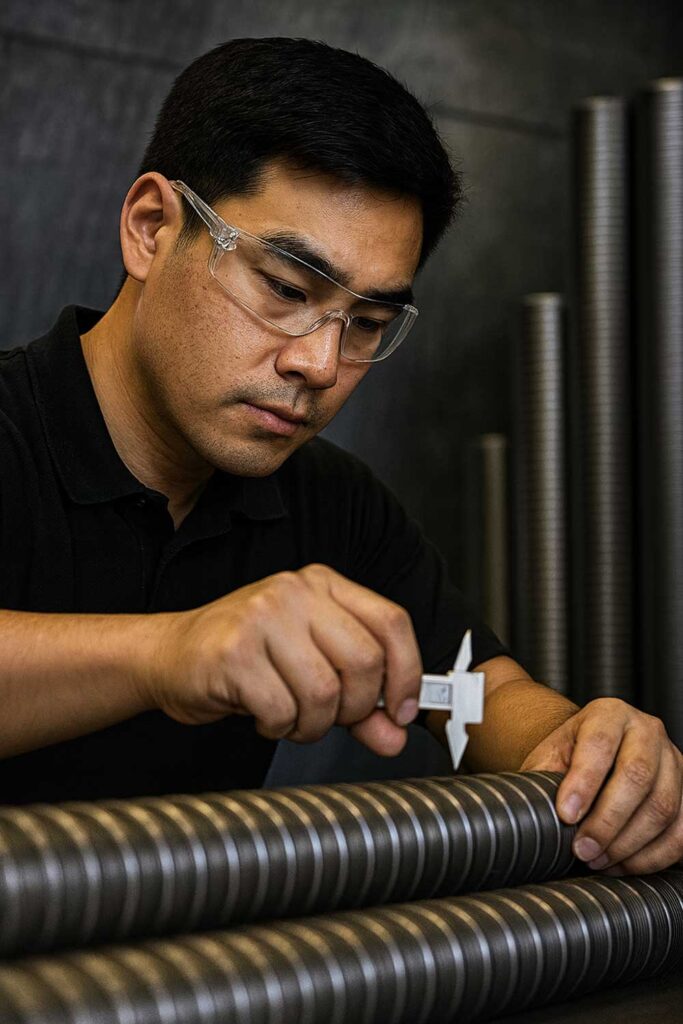
Vulroc® integral low fin tubes are manufactured from premium base tube materials, including copper, stainless steel, carbon steel, titanium, and specialized alloys, delivering exceptional heat transfer efficiency, compact design, and reliable performance in demanding thermal applications.
Our products find applications across various sectors:
- Shell & tube heat exchangers
- Refrigeration condensers
- HVAC chillers
- Marine heat exchangers
- Oil coolers
- Chemical processing equipment
- Power plant condensers
- Industrial cooling systems
FAQ
1. What are integral finned tubes?
Integral finned tubes, also known as low fin tubes, are manufactured by forming fins directly from the base tube material. Since the fins are not welded or attached, they provide excellent thermal conductivity, strong mechanical bonding, and reliable performance in heat exchanger applications.
2. What is the advantage of Vulroc® integral finned tubes?
Vulroc® integral finned tubes offer increased heat transfer surface area while maintaining a compact design. The integral fin structure eliminates contact resistance, improves efficiency, and ensures long-term durability compared to welded or embedded finned tubes.
3. How much does a low fin tube improve heat transfer?
Integral finned tubes typically increase the external heat transfer area by up to 2.5 times compared to plain tubes. This allows smaller heat exchangers, reduced material usage, and improved thermal efficiency.
4. What materials are available for integral finned tubes?
Vulroc® integral finned tubes can be manufactured from copper, copper alloys, stainless steel, carbon steel, titanium, aluminum brass, and copper nickel alloys depending on the application and operating environment.
5. Where are integral finned tubes used?
These tubes are widely used in shell & tube heat exchangers, HVAC systems, marine coolers, condensers, oil coolers, refrigeration systems, and chemical processing equipment where enhanced heat transfer is required.
6. Are integral finned tubes easy to clean?
Yes. The low fin geometry allows mechanical and chemical cleaning. The fins are robust and formed from the base material, which reduces the risk of damage during maintenance.
7. What is the typical fin height and density?
Integral fin tubes typically have fin heights up to 1.3 mm and fin density between 19 and 26 FPI. Custom fin geometry can also be produced based on heat exchanger design requirements.
8. What standards apply to Vulroc® integral finned tubes?
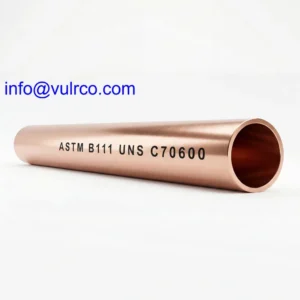
These tubes can be supplied according to ASTM B359 (for copper-based tubes), EN 10204 3.1 / 3.2 certification, and base tube standards such as ASTM A213, A249, B111, and B75.