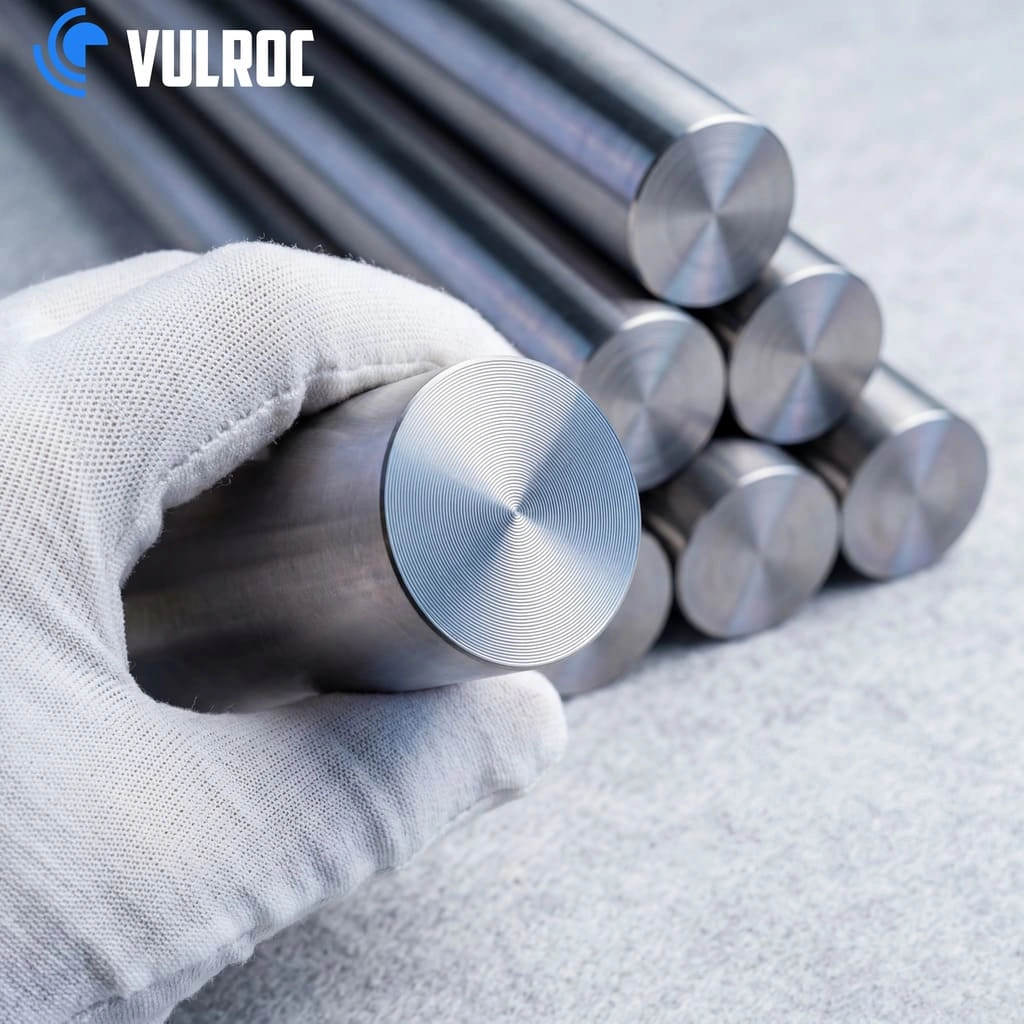
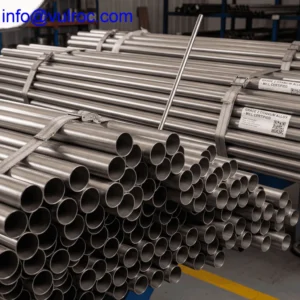
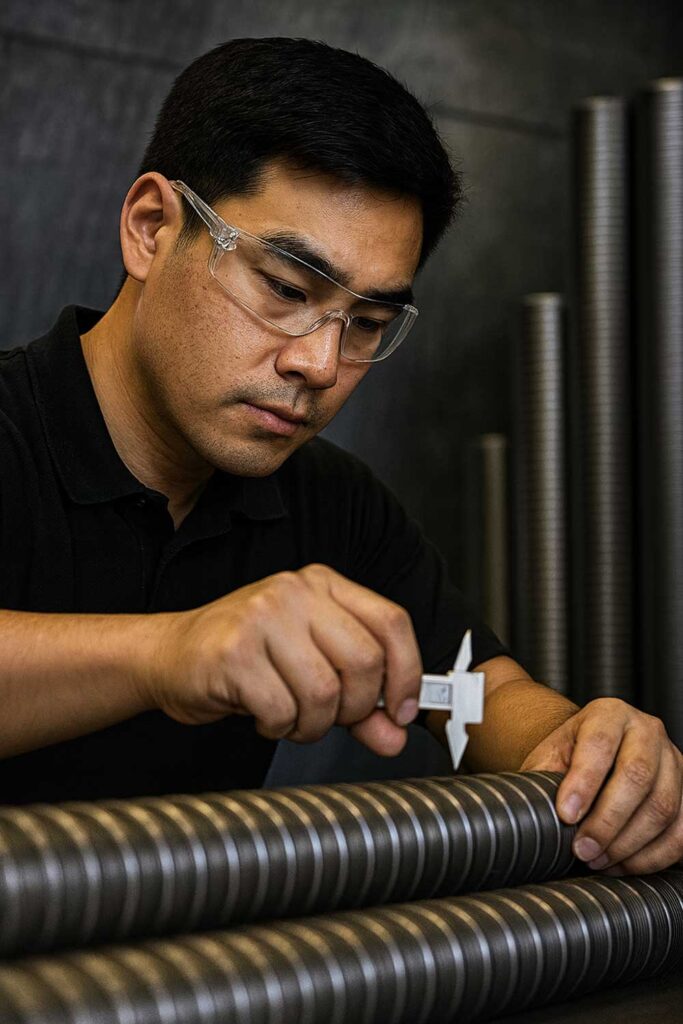
Vulroc® titanium rods (titanium bars) are manufactured from premium-grade titanium and titanium alloys, offering excellent corrosion resistance, high strength-to-weight ratio, and outstanding performance in demanding environments. Available in commercially pure titanium and titanium alloys, these bars are widely used in aerospace, chemical processing, marine, medical, and industrial applications where reliability and lightweight performance are essential.
Produced using vacuum melting and precision forging processes, Vulroc® titanium bars provide uniform microstructure, excellent mechanical properties, and superior surface quality. Multiple surface finishes and custom sizes are available to meet diverse engineering requirements.
Vulroc® provides full customization services:
- Custom diameter and length
- Special tolerance requirements
- Custom surface finish
- Cutting and machining services
- Heat treatment options
- Special packaging
- Project-based supply
Our engineering team works closely with customers to deliver titanium bars tailored to exact application requirements.
Quality
Vulroc® titanium rods are produced through a controlled manufacturing process:
- Vacuum melting (VAR / VIM)
- Billet forging
- Hot rolling / rotary forging
- Rough machining or turning
- Centerless grinding (optional)
- Straightening
- Surface treatment
- Inspection and testing
- Final packaging
FAQ
1. What is a titanium rod (titanium bar)?
A titanium rod, also called a titanium bar, is a solid round metal product made from commercially pure titanium or titanium alloys. It offers excellent corrosion resistance, high strength-to-weight ratio, and outstanding performance in aerospace, chemical processing, marine, and medical applications.
2. What grades of titanium rods are available?
Vulroc® titanium rods are available in Grade 1, Grade 2, Grade 3, Grade 4, Grade 5 (Ti-6Al-4V), Grade 7, Grade 9, Grade 12, and Grade 23 (Ti-6Al-4V ELI). Each grade provides different strength, corrosion resistance, and application suitability.
3. What is the most commonly used titanium bar grade?
Grade 2 titanium is the most widely used due to its excellent corrosion resistance and good strength. Grade 5 (Ti-6Al-4V) is commonly used for aerospace and high-strength applications, while Grade 23 is preferred for medical applications.
4. What sizes are available for titanium rods?
Titanium rods are typically available in diameters from Φ6 mm to Φ450 mm, with standard lengths up to 6000 mm. Custom lengths up to 12000 mm and cut-to-size options are also available.
5. What standards apply to titanium bars?
Vulroc® titanium bars can be supplied according to ASTM B348, ASME SB348, AMS 4928, AMS 6931, ASTM F136, and ISO 5832-3 depending on application requirements.
6. What surface finishes are available?
Titanium rods can be supplied with polished, turned (peeled), centerless ground, sandblasted, or pickled surfaces. Custom surface finishes and machining services are also available.
7. What industries use titanium rods?
Titanium rods are widely used in aerospace, marine, chemical processing, oil & gas, medical equipment, automotive, and power generation industries due to their corrosion resistance and lightweight strength.
8. Can titanium rods be machined and welded?
Yes. Titanium rods offer good machinability and weldability. They can be cut, drilled, machined, and welded for manufacturing components such as shafts, fasteners, and structural parts.
9. Why choose titanium instead of stainless steel?
Titanium is significantly lighter than stainless steel while offering comparable or better corrosion resistance. It also provides excellent performance in seawater, chloride environments, and high-temperature applications.
10. Do you provide custom titanium bar sizes?
Yes. Vulroc® offers custom diameters, lengths, tolerances, and machining services. OEM and project-based production are available based on customer drawings and specifications.