Applications
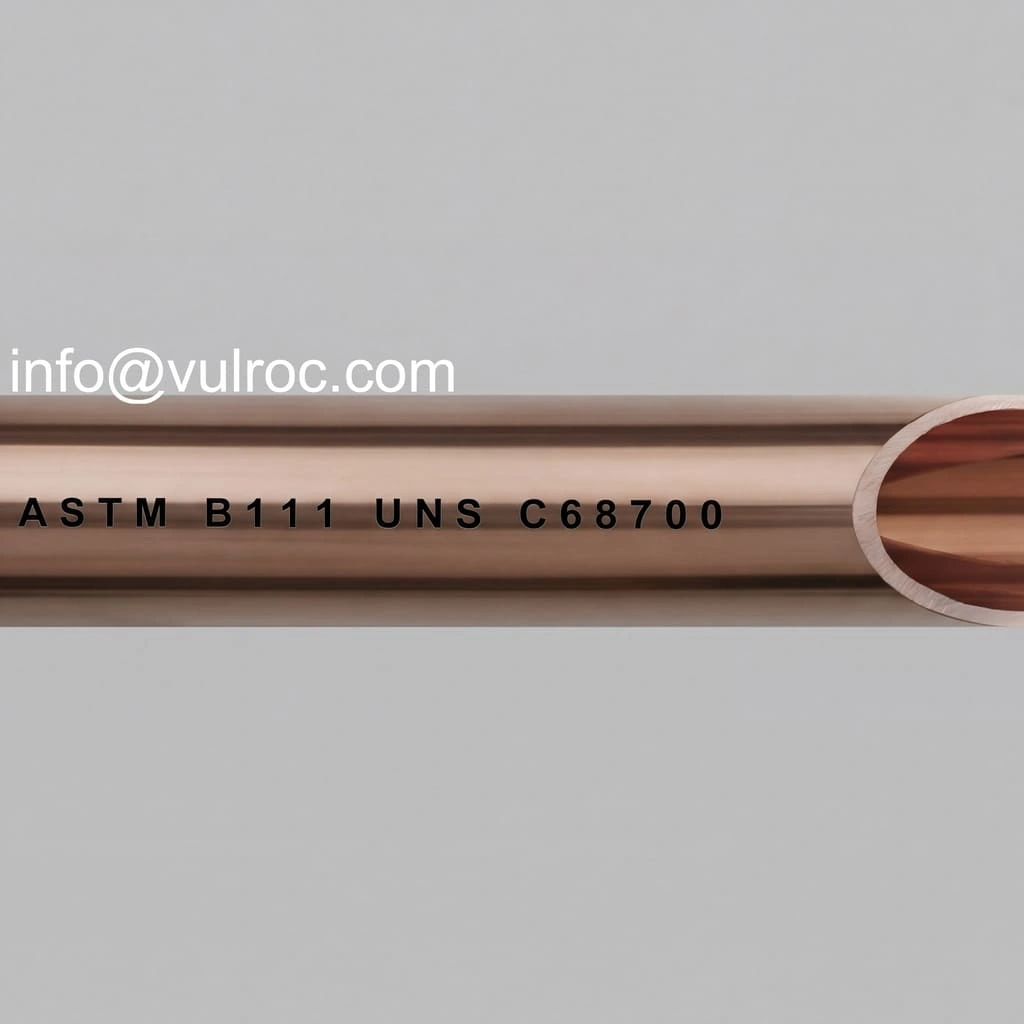
C68700 aluminum brass tubes are commonly used in:
- Condenser tubes for high-velocity cooling water systems
- Seawater cooling systems in marine and offshore applications
- Power plant condensers (both marine and land-based)
- Desalination plants and saltwater treatment facilities
- Heat exchangers exposed to turbulent or contaminated water
- Industrial cooling systems using brackish or saline water circulation
Key Benefits
- Excellent resistance to impingement and erosion – suitable for high-velocity cooling water service
- Superior corrosion resistance – aluminum and inhibitor additions protect against pitting, dezincification, and scaling
- Reliable performance in marine environments – maintains stability under varying temperature and flow conditions
- Good thermal conductivity – supports efficient heat transfer in condenser and exchanger applications
- Extended service life – reduces maintenance and operational downtime
- Standards compliance – manufactured according to ASTM B111, B395 and ASME SB111, SB395
Technical Specifications
UNS No.
C68700 – BSI No. CZ110 – ISO Name CuZn22Al2
Chemical Composition (%)
Cu: 76 – 79
Al: 1.8 – 2.5
Pb: ≤ 0.07
Fe: ≤ 0.06
As: 0.02 – 0.06
Zn: Balance
ASTM Specification
B111, B395
ASME Specification
SB111, SB395
Typical Applications
Heat exchangers, condensers, cooling systems, and desalination equipment
Temper
O61 (Annealed)
Properties and Metrics
| Property |
Metric |
English |
| Density |
8.33 g/cm³ |
0.301 lb/in³ |
| Tensile Strength |
345 MPa |
50 ksi |
| Yield Strength |
125 MPa |
18 ksi |
| CTE, Linear |
18.5 × 10⁻⁶/°C @ 20–300°C |
10.3 × 10⁻⁶/°F @ 70–570°F |
| Specific Heat Capacity |
0.09 cal/g-°C @ 20°C |
0.09 BTU/lb-°F @ 70°F |
| Thermal Conductivity |
100.4 W/m·K @ 20°C |
58 BTU/ft²/ft/h/°F @ 70°F |
| Melting Point |
932 – 971°C |
1710 – 1780°F |
* The values shown are typical reference data only and should not be used for exact design or engineering purposes.
FAQ
What is C68700 aluminum brass?
C68700 aluminum brass is a copper-zinc alloy containing approximately 2% aluminum with small additions of arsenic as a corrosion inhibitor. It is specifically developed for condenser and heat exchanger tubing operating in seawater and brackish water, offering strong resistance to impingement, erosion, and corrosion.
What is aluminum brass used for?
C68700 aluminum brass tubes are commonly used in power plant condensers, marine cooling systems, desalination plants, offshore platforms, and industrial heat exchangers. They are particularly suitable for applications involving high-velocity seawater or contaminated cooling water.
Why is C68700 suitable for high-velocity seawater?
The aluminum addition forms a protective oxide film on the tube surface, which improves resistance to erosion and impingement attack. This protective layer helps prevent metal loss and ensures long-term reliability in turbulent and high-flow seawater systems.
What is the difference between aluminum brass and admiralty brass?
Aluminum brass (C68700) contains aluminum for improved erosion resistance and is better suited for high-velocity seawater. Admiralty brass (C44300) contains tin and is typically used in moderate flow and less aggressive cooling water conditions. Aluminum brass generally provides longer service life in demanding marine environments.
Is C68700 resistant to dezincification?
Yes. C68700 aluminum brass includes inhibitors such as arsenic that help prevent dezincification. This ensures the alloy maintains its strength and corrosion resistance when exposed to saline or polluted water.
Can C68700 aluminum brass tubes be expanded and bent?
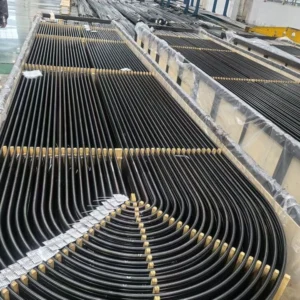
Yes. C68700 tubes offer good fabrication properties and can be expanded into tube sheets, bent into U-tubes, and welded or brazed. This makes them suitable for various condenser and heat exchanger designs.
What industries use C68700 aluminum brass tubes?
Typical industries include power generation, desalination, shipbuilding, offshore oil & gas, petrochemical processing, and marine engineering. These sectors rely on aluminum brass tubes for durability in seawater cooling systems.
What standards apply to C68700 tubes?
C68700 aluminum brass tubes are commonly manufactured according to ASTM B111, ASTM B395, and ASME SB111 specifications for condenser, heat exchanger, and cooling system applications.