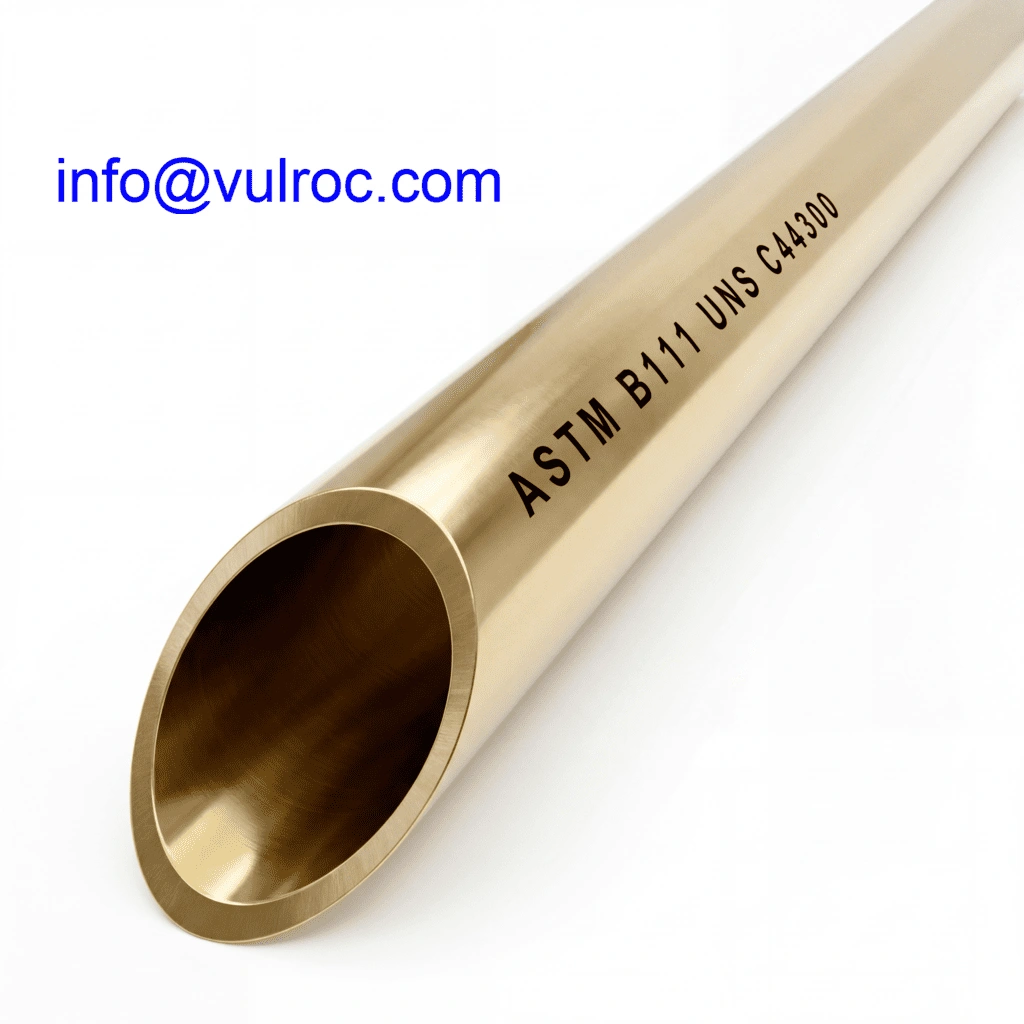
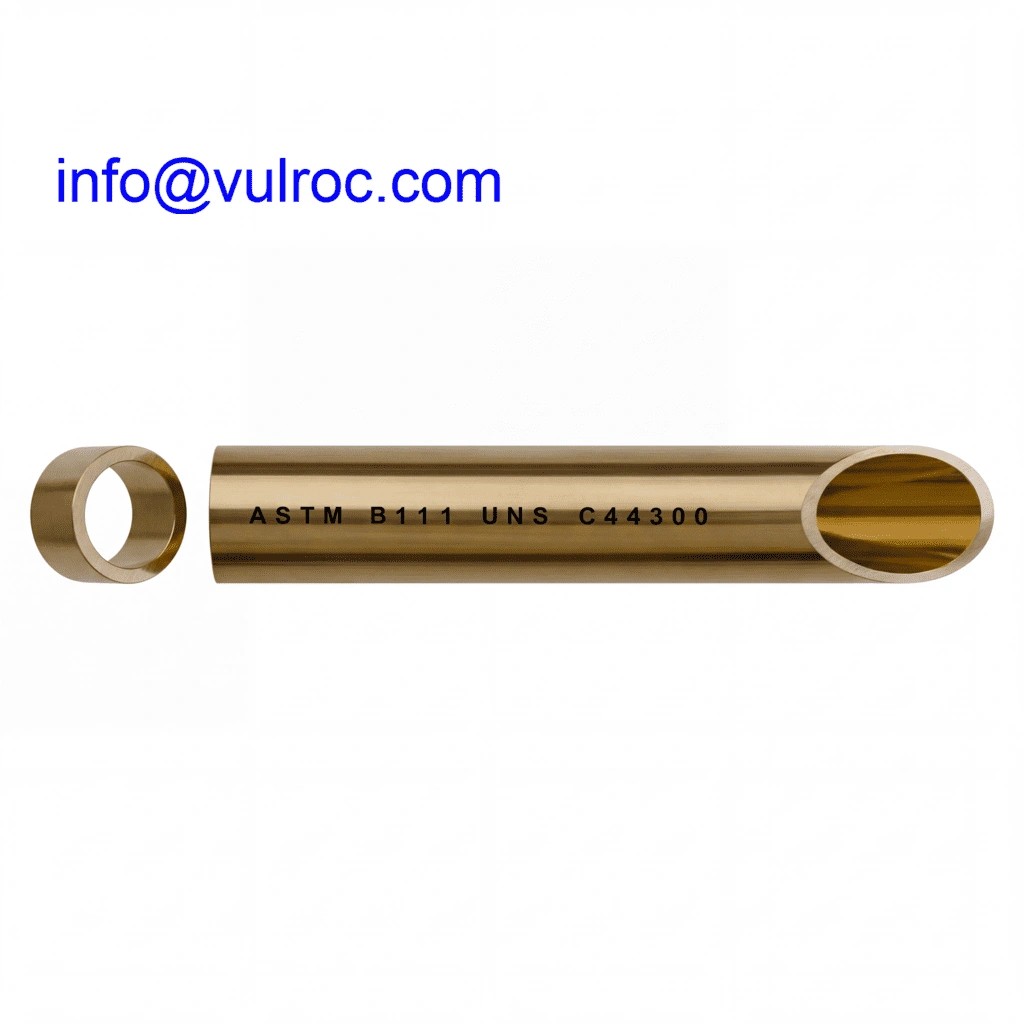
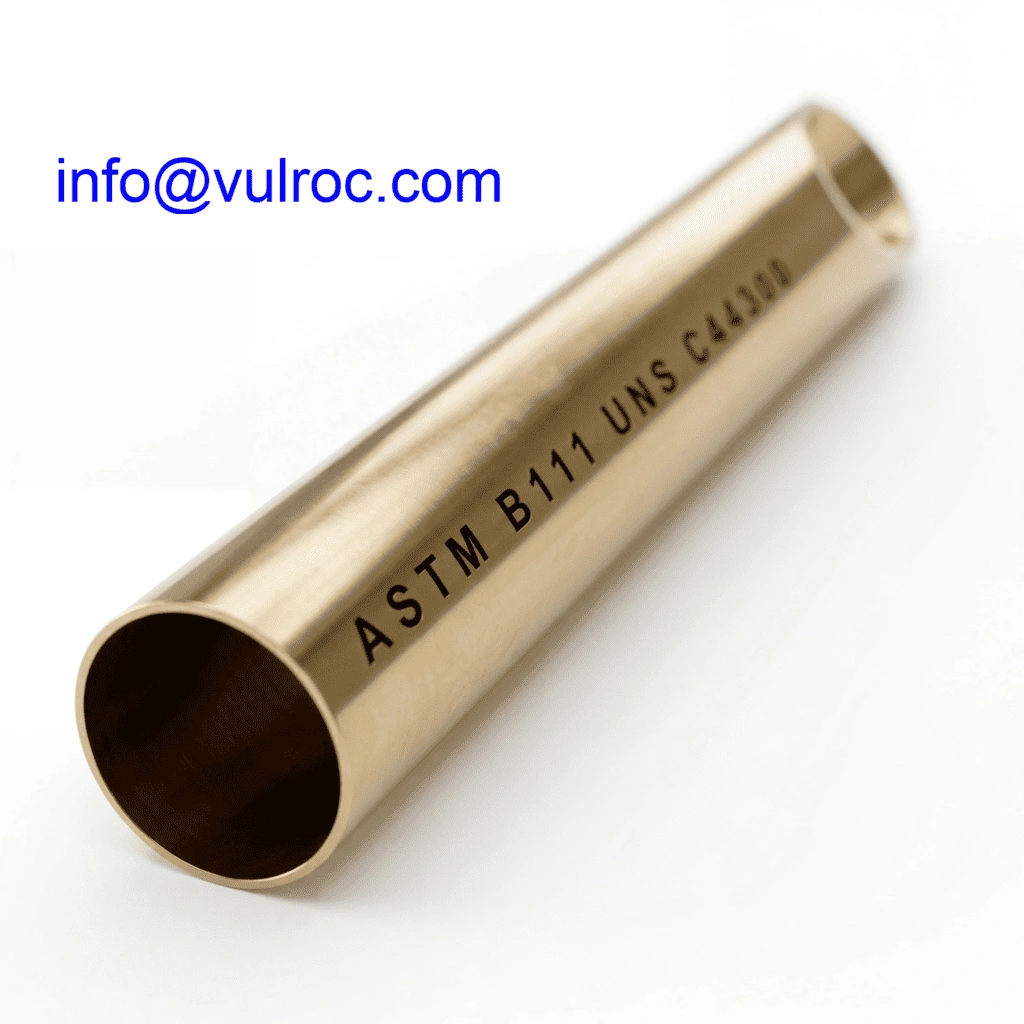
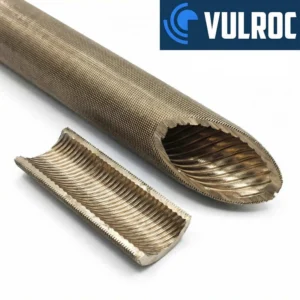
Inhibited Admiralty brass tubes (C44300) are manufactured from a copper-zinc alloy with a small addition of tin and arsenic as a corrosion inhibitor, providing excellent resistance to polluted, brackish, and saline water. With more than 70% copper content, this alloy combines good thermal conductivity, mechanical strength, and enhanced corrosion resistance, making it ideal for demanding heat transfer applications.
C44300 admiralty brass tubes are widely used in steam condensers cooled by fresh, seawater, or brackish water. They are commonly applied in power generation, oil refining, marine engineering, and desalination systems, where resistance to sulfur compounds, organic contaminants, and aggressive cooling media is essential. The alloy delivers stable performance under elevated temperature and pressure conditions.
C44300 Admiralty brass tubes are commonly used in:
- Steam condensers using fresh, brackish, or seawater
- Feedwater heaters in power plants
- Heat exchangers in oil refineries and chemical facilities
- Marine and offshore cooling systems
- Desalination and water treatment equipment
- Thermal equipment operating in polluted or corrosive environments
Technical
|
Item
|
Specification
|
| UNS No. |
C44300 – BSI No. CZ111 – ISO Name CuZn28Sn1 |
| Chemical Composition (%) |
Cu: 70 – 73Sn: 0.9 – 1.2Pb: ≤ 0.07Fe: ≤ 0.06As: 0.02 – 0.06Zn: Balance |
| ASTM Specification |
B111, B395 |
| ASME Specification |
SB111, SB395 |
| Temper |
O61 (Annealed) |
Properties and Metrics:
| Property |
Metric |
English |
| Density |
8.53 g/cm³ |
0.308 lb/in³ |
| Tensile Strength |
310 – 380 MPa (typ.) |
45 – 55 ksi |
| Yield Strength |
105 MPa |
15 ksi |
| CTE, Linear |
20.2 × 10⁻⁶/°C @ 20–300°C |
11.2 × 10⁻⁶/°F @ 70–570°F |
| Specific Heat Capacity |
0.09 cal/g-°C @ 20°C |
0.09 BTU/lb-°F @ 70°F |
| Thermal Conductivity |
109 W/m·K @ 20°C |
64 BTU/ft²/ft/h/°F @ 70°F |
| Melting Point |
899 – 938°C |
1650 – 1720°F |
* The values shown are typical reference data only and should not be used for design or engineering purposes.
FAQ
1. What is admiralty brass?
Admiralty brass (C44300) is a copper-zinc alloy with a small addition of tin and arsenic, designed to provide excellent corrosion resistance in seawater and contaminated cooling water. It is widely used for condenser and heat exchanger tubes in marine, power generation, and industrial cooling applications where durability and reliable heat transfer are required.
2. What is the difference between brass and admiralty brass?
Standard brass is typically a copper-zinc alloy designed for general-purpose applications. Admiralty brass, however, contains a small addition of tin (around 1%) and a trace of arsenic, which significantly improves resistance to dezincification, erosion, and corrosion in seawater or contaminated cooling water. This makes admiralty brass particularly suitable for condenser and heat exchanger tubing in marine and industrial environments.
3. What is admiralty brass used for?
Admiralty brass is commonly used for condenser and heat exchanger tubing in marine and industrial environments. It is widely applied in seawater-cooled condensers, desalination plants, power generation facilities, and offshore cooling systems where strong resistance to brackish water, seawater, and contaminated cooling media is required.